
Nowadays, more than ever, modern organizations rely on data and interconnected systems to maintain efficient digital operations. But when any part of that system fails, everything feels the impact: productivity drops, revenue slows, and cyberattacks rise. Recent insights from SQ Magazinereveal the growing importance of cloud technologies, with94 percentof enterprises now utilizing cloud services. The United States leads the shift, as68 percent of businesses run most of their core operations in the cloud.
As companies expand their digital ecosystems, cloud disaster recovery becomes essential. It protects critical workloads, ensures high availability, and speeds up restoration through automated solutions. So, here are the vital tips you should follow to strengthen your IT resilience strategies and achieve the confidence to operate without disruption in an unpredictable digital landscape.
What is a disaster recovery plan, and why does it matter?
A disaster recovery (DR) plan explains how an organization responds when a system fails, a cyberattack hits, or an unexpected outage disrupts operations. It outlines the steps required to restore applications, recover data, and return everything to normal within the expected timeframes.
Modern operations rely on continuous availability, and even a brief interruption can result in data and financial loss. Organizations without robust data backup and recovery practices or reliable backup and restore solutions face a significantly higher risk of prolonged downtime or permanent damage.
That is where DR solutions become critical. They enable teams to respond quickly and with confidence, supporting business continuity planning, allowing for high availability and failover systems, and leveraging cloud-based data backup In simple words, it’s your organization’s safety net in case of emergencies.
Cloud disaster recovery vs. traditional solutions
Before selecting a disaster recovery strategy, it’s essential to understand the differences between traditional and cloud-based approaches.
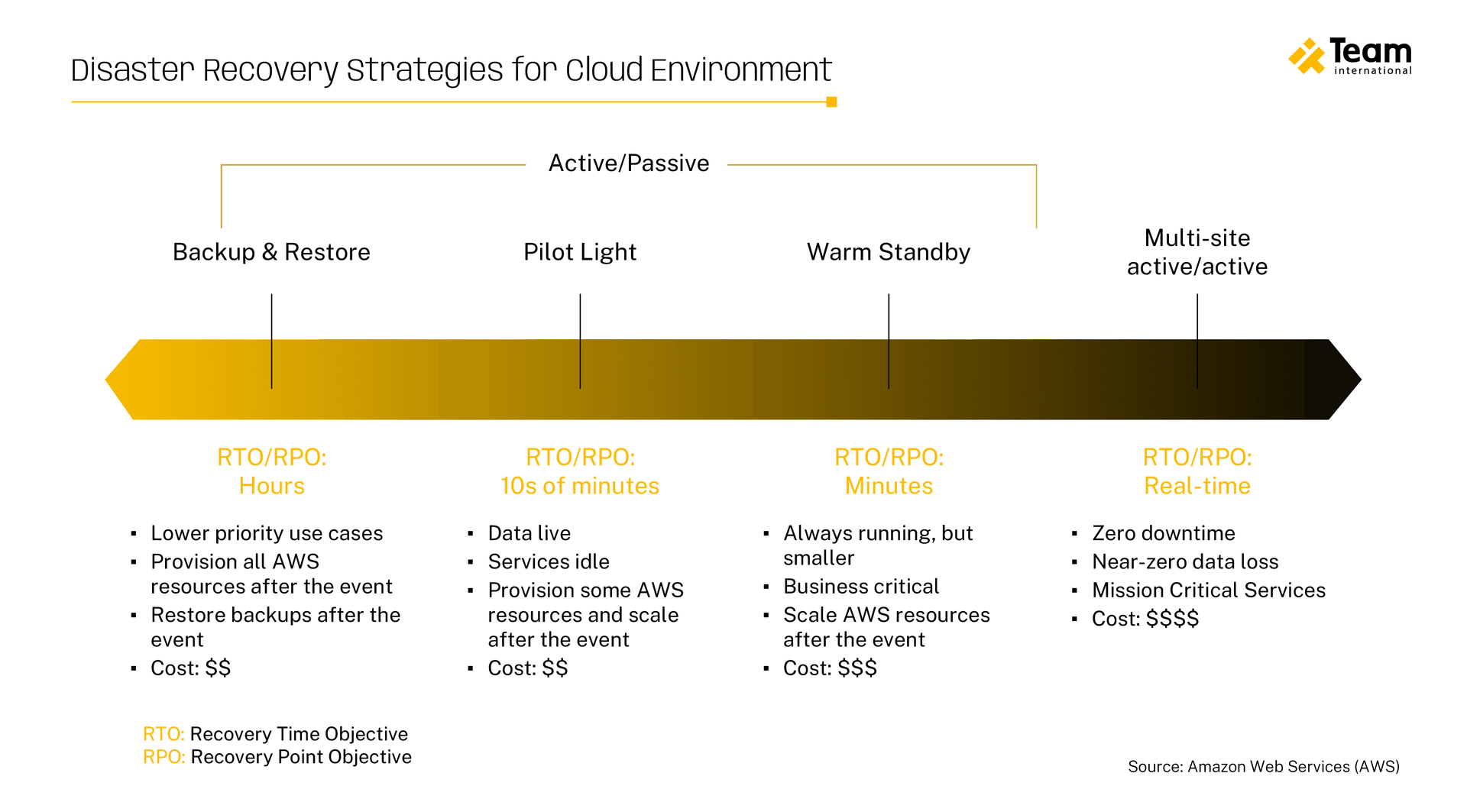
Traditional DR relies on hardware-heavy setups, manual procedures, and isolated backup sites. These models often rely on passive tactics, such as scheduled backups or cold environments that remain idle until a failure occurs. While they offer a basic level of protection, they also slow down recovery and limit scalability. And when a critical system fails, teams must manually activate the infrastructure and rebuild configurations, often leading to prolonged downtime and a significant financial impact.
Cloud disaster recoverychanges that picture completely. Instead of relying on static infrastructure, organizations utilize continuous replication, cloud infrastructure redundancy, and high-availability systems that enable services to be brought back online quickly and consistently. Modern disaster recovery in cloud computing utilizes automated failover workflows to minimize manual steps and deliver predictable recovery. Models likehybrid cloud disaster recoveryandDisaster Recovery as a Service (DRaaS) give companies flexible options to protect mission-critical workloads and bring operations back online within minutes.
Google Cloudhighlights three phases that define aneffective DR strategy:
- Preventive: Includes backup routines, configuration monitoring, and policies that reduce the likelihood of events.
- Detective: Ensures real-time visibility into systems so issues are identified the moment they occur.
- Corrective: Enables organizations to execute recovery procedures quickly and reliably when an incident happens.
The cloud-based DR is a catalyst for broader digital transformation solutions McKinseyestimates that accelerated cloud adoption could unlock up to** $3 trillionin EBITDA by2030**, driven by stronger resilience and smarter use of scalable cloud capabilities.
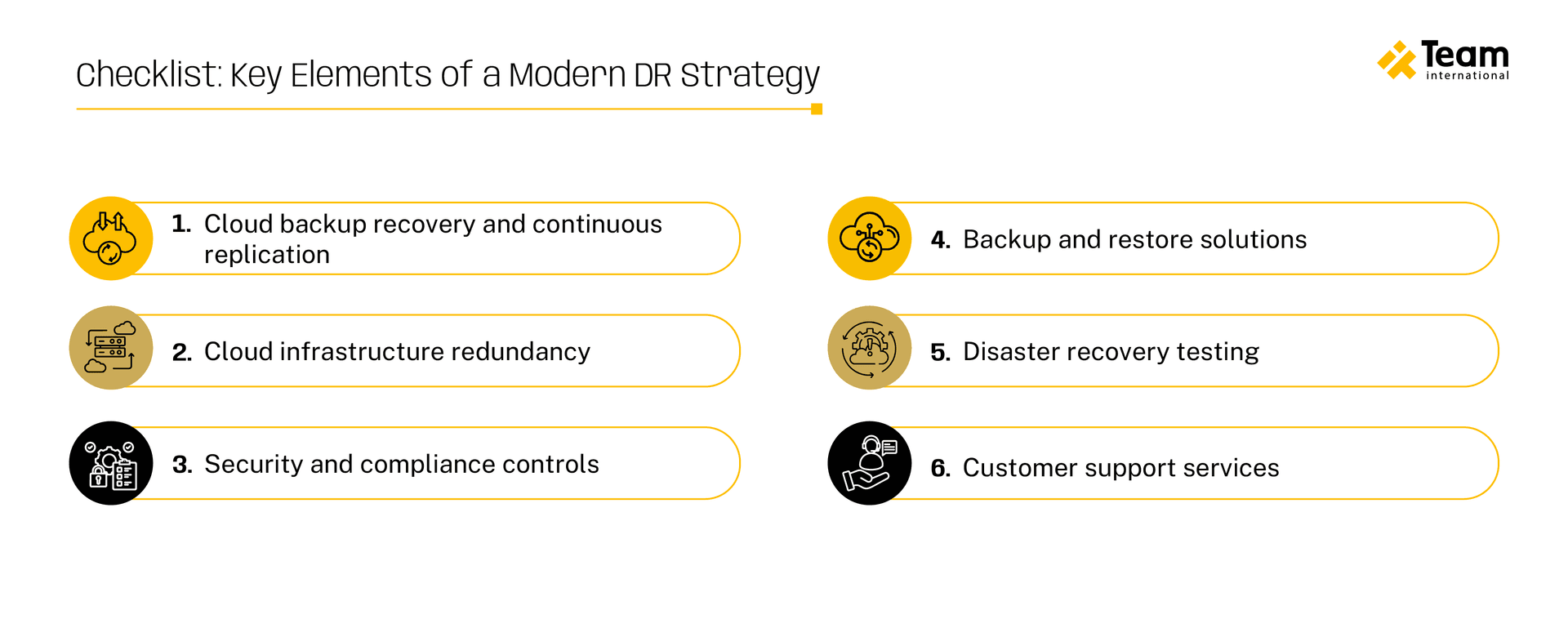
Key components of cloud backup and data recovery
1. Cloud backup recovery and continuous replication
Reliable protection begins with secure, automated backups stored across distributed cloud storage for disaster recovery environments. Encryption, versioning, and retention policies ensure that organizations always have trustworthy and recoverable copies of their most important data.
Near real-time replication enhances operational continuity by synchronizing critical information across multiple regions, thereby reducing RPOs and minimizing data loss during an outage.
2. Cloud infrastructure redundancy
Redundant compute, storage, and network layers eliminate single points of failure, enabling predictable recovery and ensuring uninterrupted operations. This is one of the key strengths of disaster recovery in cloud computing.
3. Security and compliance controls
A strong backup strategy must protect data at every stage. Encryption, identity management, and access controls safeguard sensitive information, while audit logging ensures transparent oversight throughout the DR process.
4. Backup and restore solutions
Fast restoration is essential for minimizing downtime. Cloud native snapshots, automated restore procedures, and orchestration tools help organizations recover workloads with speed and accuracy.
5. Disaster recovery testing
Testing validates the effectiveness of every component. Regular simulations, automated checks, and maintenance cycles ensure that DR plans stay aligned with the evolving system.
6. Customer support services
Resilient recovery also depends on human expertise. Strong customer support services ensure teams receive timely guidance during high-impact events, helping accelerate resolution and reinforcing business continuity across the organization.
Best practices for implementing DR solutions in cloud computing
1. Define clear RTOs and RPOs
A strong DR strategy starts with clarity. Your Recovery Time Objective (RTO) and Recovery Point Objective (RPO) establish guidelines for how quickly you need to recover and how much data the business can afford to lose. Setting these targets early ensures that your infrastructure, tools, and processes are aligned with real operational needs.
2. Use cloud-based disaster recovery services
When systems go down, time is gold. Modern cloud-based disaster recovery services automate backup, replication, and failover, helping teams bring critical workloads back online in minutes. Automation eliminates guesswork, reduces manual errors, and provides teams with a dependable process to follow during high-pressure situations.
3. Implement hybrid and multicloud flexibility when needed
Different workloads have different needs. Some perform best on-premises, while others thrive in the cloud. Hybrid and multicloud models provide organizations with the flexibility to place applications where they run most efficiently, reduce dependency on a single provider, and enhance resilience across multiple environments.
4. Test early, test often
DR solutions only work if they are tested. Regular disaster recovery testing and simulation exercises reveal gaps, confirm that permissions and workflows behave as expected, and help teams stay ready for real incidents.
Future-proof your organization’s cloud with the right team
As businesses scale their digital operations, the ability to stay strong and adaptable in the face of disruption becomes a real advantage. Cloud disaster recovery solutions provide organizations with the automation, redundancy, and agility they need to keep everything running smoothly, no matter what happens.
Cloud adoption continues to rise, and resilience will distinguish the leaders from everyone else. The companies investing in modern DR solutions today are the ones that will operate without interruption, adapt quickly to change, and capture long-term value in an increasingly dynamic digital landscape.
Thinking about strengthening your cloud strategy with expert support? Reach out to our cloud management services team! Let’s build a resilient future for your organization and keep you ahead while your competition tries to catch up.