
How Business Intelligence Tools are Reshaping the Telecom Industry
Explore the power and importance of telecom business intelligence and how it fuels innovation, efficiency, and strategic data-driven decision-making.
15 MIN
By: TEAM International | Apr 16, 2025 | 15 min
With the constant growth of the internet's benefits, nowadays, everyone uses their smart devices to access their bank accounts, emails, and social media. And the more technology-dependent we become, the more exposed we are tos cyber threats.
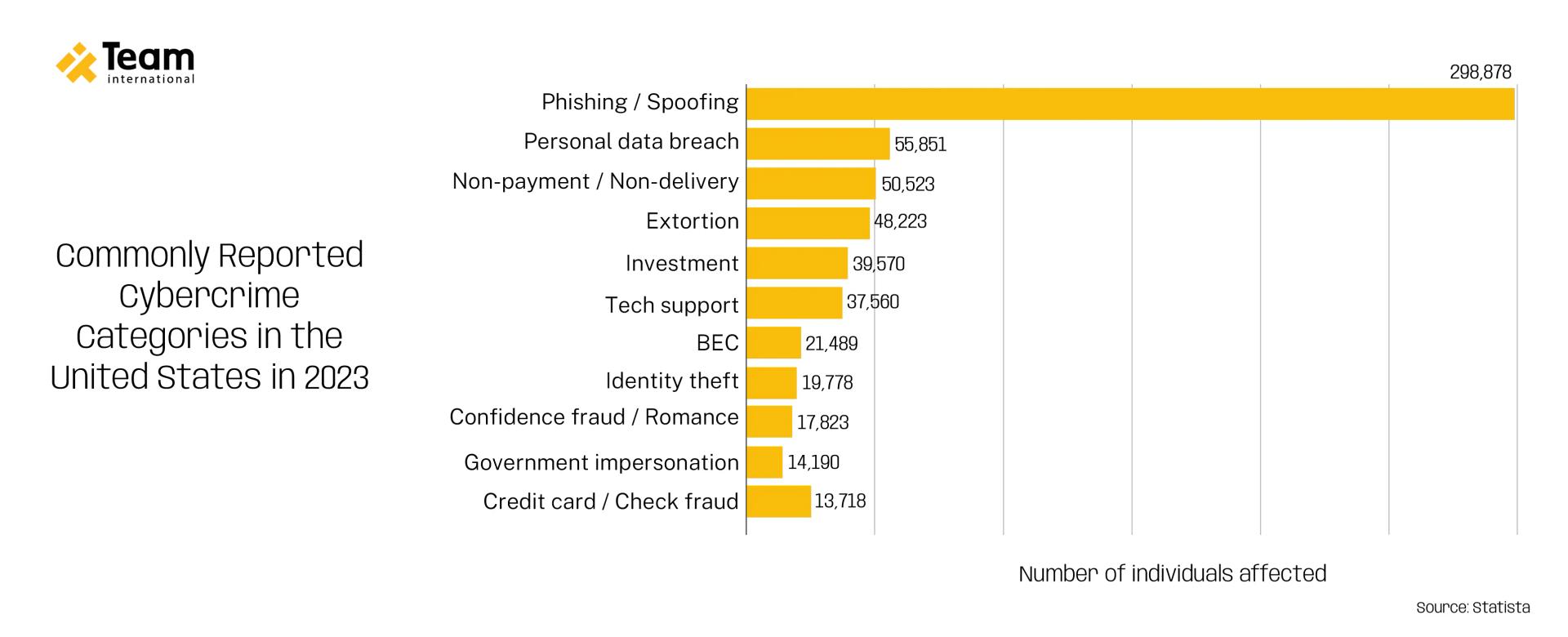
Phishing, malware, credit card fraud, and personal data breaches, among others, have become the most common cybercrimes in the last few years, affecting millions of people and businesses worldwide. Specialists expect the cost of damage from malicious cyber activities to continue rising and project it to reach $10.5 trillion by the end of 2025.
In the third quarter of 2024, social media was the most targeted industry for phishing attacks, representing 30.5 percent worldwide. The nature of these platforms makes people vulnerable to clicking on risky links, either to look up “news” or “job applications,” without realizing what they're getting into.
Traditionally, identifying, containing, and recovering from cyberattacks relied entirely on skilled human labor and was done manually. This approach had some challenges, like how long it took to detect, control, and resolve cyber threats without automation. Now, let's add the risk of human mistakes in repetitive tasks to the equation. But, thanks to artificial intelligence solutions, cybersecurity has evolved drastically during the last five years.
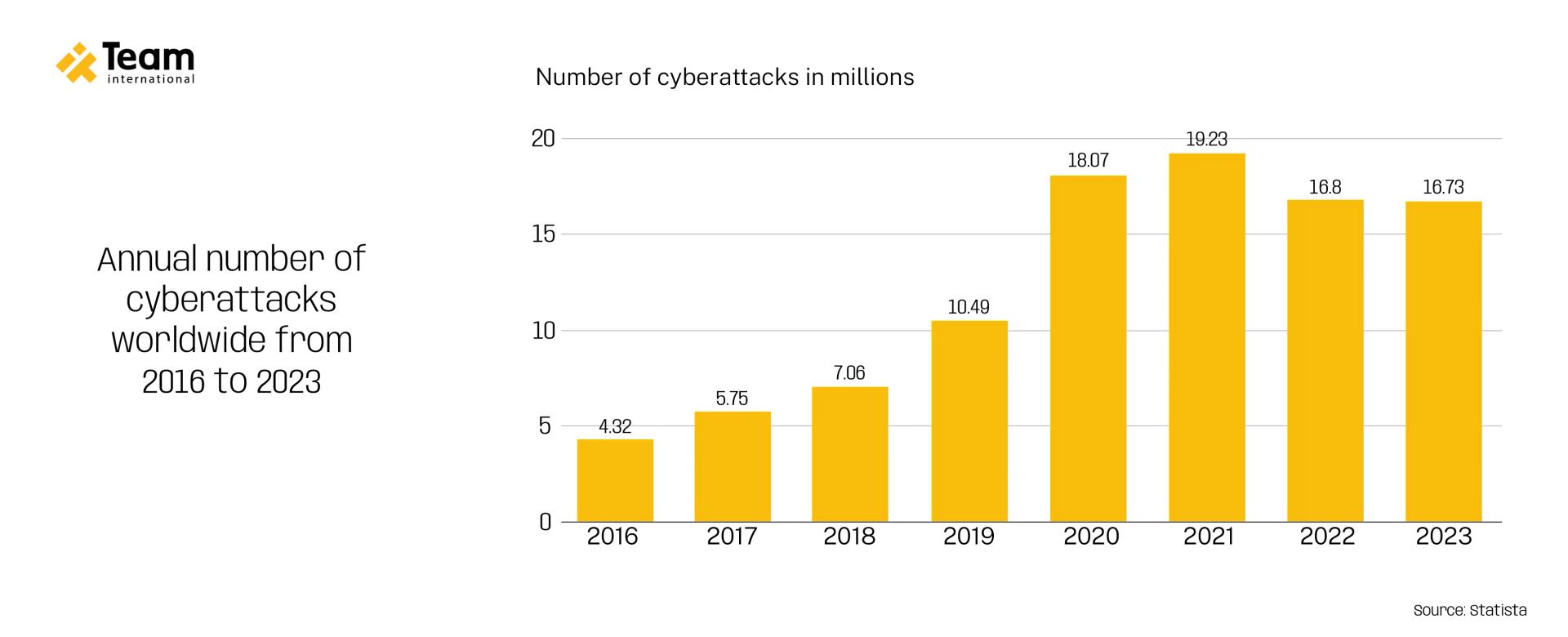
The frequency, volume, and complexity of malicious cyber activities are only going up, and according to Statista, there were 17 million cyberattacks in 2023. Since companies are exposed to constant danger, implementing cybersecurity IA is a no-brainer. It became an essential tool in IT years ago, enabling real-time analysis of vast amounts of data and helping detect patterns and anomalies much faster.
By using machine learning in automated threat protection, companies can enhance the process of blocking malicious traffic and isolating infected systems while improving the recovery process to speed up the response to cyberattacks.
Additionally, it offers other advantages such as:
There's a constant debate regarding whether AI will substitute humans, but we're far from that. Indeed, it will replace certain types of jobs, and yes, artificial intelligence for cybersecurity is an excellent tool for optimizing and improving the work we already do, but it needs constant supervision.
Between 2023 and 2024, the US employed approximately 1.24 million cybersecurity professionals. Forbes projects security jobs to grow by 32 percent between 2022 and 2032—which makes sense. We need more specialized employees to keep up with the constant increase in the volume and sophistication of cyberattacks. And even understanding how important AI has become in IT security solutions, SREs don't think they will be replaced by this tool any time soon.
AI has its limitations and risks. Since it relies on the data you train it with, any “noise” or “garbage” that slips in will affect its results. In other words, the quality of its output depends entirely on the quality of the information that goes in. That's why we always emphasize the importance of verifying the data you provide to ML models.
Similarly, we don't recommend fully trusting the information generated by artificial intelligence. It's essential to always verify a model's results and ensure that its decision-making aligns with your predefined needs.
AI-driven security systems are designed to process and analyze large amounts of data in real-time. These models use machine learning to identify patterns and flag potential anomalies, which the same artificial intelligence or your IT team will review. Additionally, it can detect, adapt, and prioritize software vulnerabilities and weaknesses, allowing it to respond quickly and mitigate damage.
AI can access and analyze historical user behavior data to identify patterns and detect any unusual activity. It's the perfect tool to decide if a user account is at risk and prevent identity fraud. Also, it can analyze login patterns, such as IP addresses and devices, to detect and prevent suspicious activities.
Automations are perfect for security information and event management (SIEM) tasks, ranging from log analysis and threat correlation to alert prioritization. ML enhances the detection of phishing cyberattacks more efficiently by identifying anomalies in websites, emails, unusual sender addresses, and suspicious links. This allows SREs to focus on more complex and strategic work that only humans can do.
According to IBM, the definition of a security operation center (SOC) is to enhance threat detection, response, and prevention capabilities by leveraging cybersecurity operations and technologies. And as we said before, one of the biggest challenges with incident response was that it traditionally relied entirely on humans. That means the size of an IT team limited that time and efficiency.
Cybersecurity AI helps optimize threat detection, monitoring, and response tasks. It correlates data to identify patterns and detect anomalies quickly and accurately, analyzing potential vulnerabilities that led to cyberattacks and executing contingency plans. Basically, automated incident reports and responses limit the damage caused by attacks and prevent future risks.
Amazon Web Services (AWS) is one of the most used public clouds for worldwide businesses. It offers over 200 features, ranging from storage, machine learning, databases, and analytics to security products. Let's focus on the aspect of cybersecurity solutions.
At the end of 2024, the company launched its AWS Security Incident Response. This service aims to empower organizations to manage cyber threat events quickly and accurately.
The three key capabilities it offers are:
Integrating AI and cybersecurity can massively improve your business's incident response—but there must be a balance between machine and human responsibilities. As Hart Rossman, director of global security at AWS, said in an interview with Forbes, “AI can handle the mundane, but you need human judgment for complex situations.”
With all the excitement surrounding artificial intelligence for cybersecurity and its ability to streamline work across various industries, it has also become a double-edged sword. There's much misinformation regarding this tool, and many are already taking advantage of it. That's why, here at TEAM , we encourage companies to stay updated with emerging technology trends. AI can be the greatest ally and your worst enemy if your company is unprepared.
Remember that maintaining constant communication with employees and educating them about online security and how to prevent potential attacks is essential, not only for the workers' safety but also for your business.
We believe the future will be built on collaboration—not only among cybersecurity specialists but also between AI developers and researchers. At the same time, governments and organizations must start developing regulations on artificial intelligence use in cybersecurity to enhance transparency and prevent the misuse of powerful technology.
How Business Intelligence Tools are Reshaping the Telecom Industry
Explore the power and importance of telecom business intelligence and how it fuels innovation, efficiency, and strategic data-driven decision-making.
15 MIN
AI and Cybersecurity: Automating Incident Response Processes to Minimize Downtime and Damage
As technology rapidly evolves, cyber threats become increasingly sophisticated. Discover how AI enhances incident response, accelerates threat detection, and minimizes damage.
15 MIN

How Mobile Apps Can Improve Customer Service in the Banking Industry
Discover how BFSI companies have been adapting to clients constantly evolving needs and why a customer-centric approach is the next big move for this industry.
18 MIN