
How Business Intelligence Tools are Reshaping the Telecom Industry
Explore the power and importance of telecom business intelligence and how it fuels innovation, efficiency, and strategic data-driven decision-making.
15 MIN

By: TEAM International | Apr 28, 2025 | 15 min
The increasing dependence on telecom services has compelled companies to leverage AI's advancements and adopt data-driven decision-making to meet customer needs and expectations. Although the telecommunications market growth is slow, it is expected to remain steady in the coming years. According to PwC, the total service revenue reached$1.14 trillion in 2023, and with an annual growth rate of 2.9 percent, it is projected to hit $1.3 trillion by 2028.
Despite the telecom sector's challenges, business intelligence solutions have emerged as one of the most powerful tools for industry leaders. It provides advanced analytics that optimize operations, enhance customer experiences, and drive innovation. So, let's explore how BI is reimagining the telecom landscape as we know it.
It's a technology-driven process designed to process and analyze raw data, turning it into actionable insights that support data-driven decision-making within a company. As an AI-powered tool, BI enables users to extract, visualize, and act on data effectively.
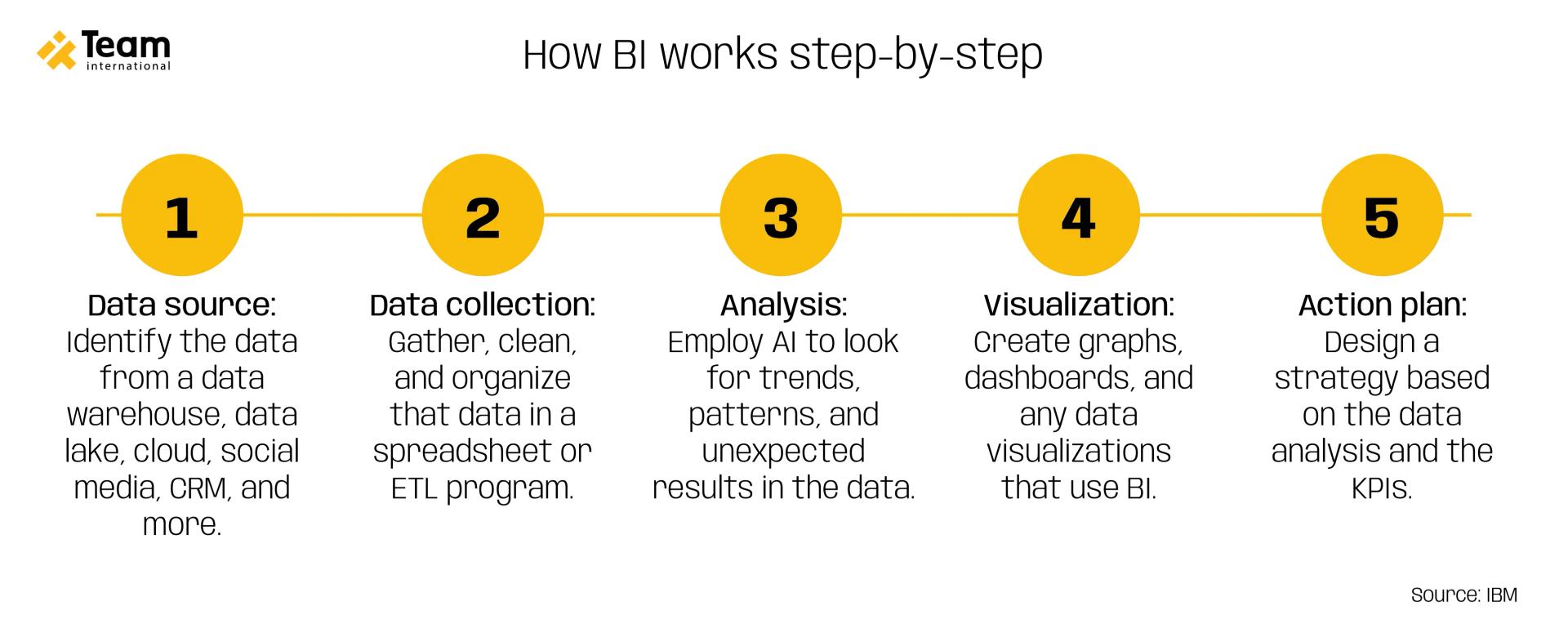
BI gives companies valuable understanding to stay competitive in a constantly evolving industry. As AI shifts from optional to essential, telco businesses must leverage its capabilities to optimize operations.
Some advantages that BI offers are:
One of the most significant pros of business intelligence is its flexibility. You can use it in many ways to help your business improve in different areas, especially when data-driven decision-making is key to staying resilient.
Since the telecom industry provides essential services like internet access, we've highlighted a few business intelligence examples that are especially relevant to this sector:
Society's reliance on technology will only continue to grow each year. According to Deloitte, 62 percent of people under 24 check their phones within the first 15 minutes of waking up—a clear sign of how deeply it has integrated into our daily lives.
Despite AI's wide range of benefits, many organizations are still not leveraging BI in the telecom industry to its full potential—a terrible mistake. With business intelligence, telco providers can analyze vast amounts of real-time data, allowing them to predict and resolve network issues before they occur. This predictive capability improves service reliability and helps companies optimize resources and anticipate future demand, ensuring they stay ahead of market trends.
AI also plays a vital role in network maintenance and infrastructure management, preventing unexpected issues. Additionally, BI assists in capacity planning, helping telecom providers efficiently manage their systems to meet future growing demand.
One of the most significant business applications of BI is its role in performance management. By analyzing KPIs and network data, companies can improve efficiency, cut expenses, and enhance service quality.
Finally, one of the most widespread uses of AI across industries is enhancing customer service and cybersecurity. AI-driven automation reduces human error and ensures 24/7 availability, making it ideal for handling repetitive tasks. While this technology is far from perfect, it significantly improves fraud detection, processes identity theft cases faster, and provides instant support for customer inquiries, leading to higher revenue and client retention.
Over the last decade, the use of artificial intelligence has skyrocketed, transforming the telecom industry. The need for more efficiency and higher revenue only increases AI's influence in decision-making processes.
However, as this tech becomes more integrated into telecom operations, it's crucial to emphasize the importance of Responsible AI (RAI). According to McKinsey, it refers to AI's ethical, secure, transparent, and compliant use. It's important to emphasize the last topic, where cybersecurity and data privacy are fundamental, especially for maintaining customer trust and meeting data governance requirements.
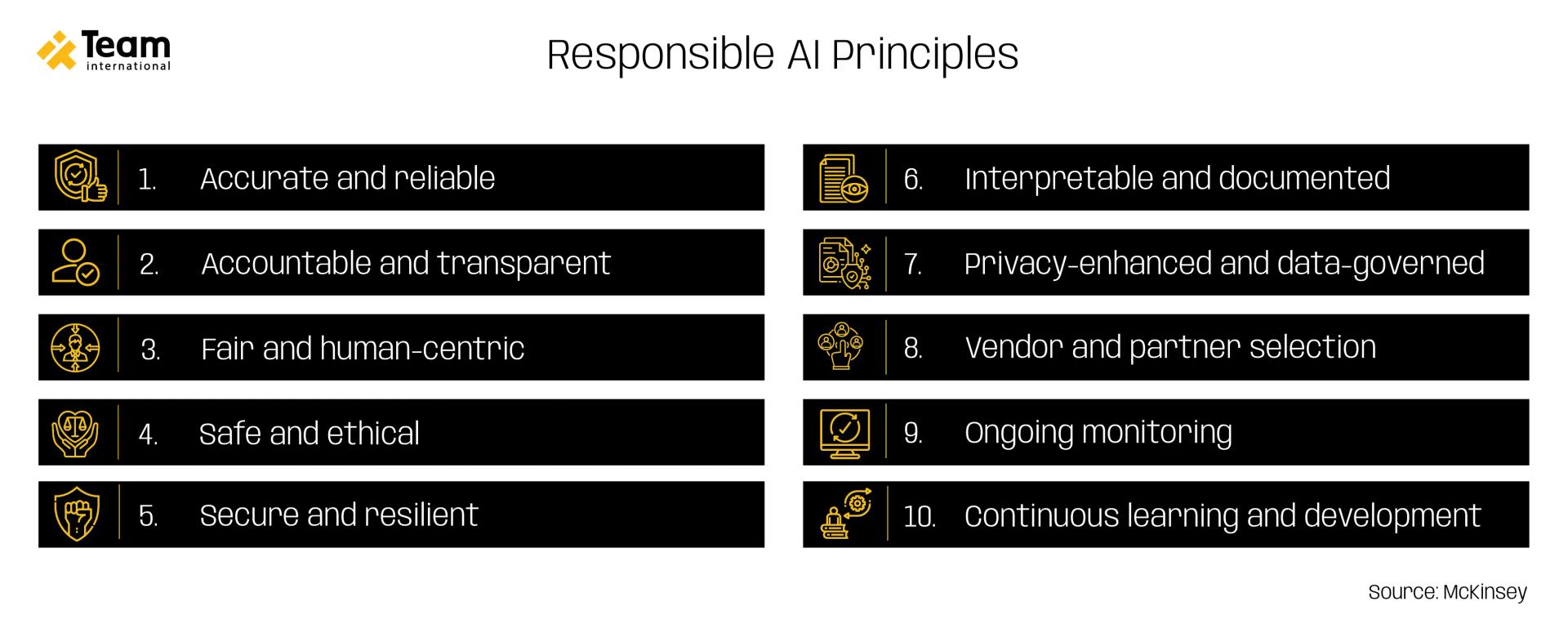
One of the most significant risks of BI in the telecom industry is the potential misuse or leakage of customer data. Proper implementation of RAI and risk management strategies helps mitigate these threats. In fact, by 2040, telecom companies that adopt advanced RAI practices could reach a global value of up to $250 billion.
The benefits of RAI in telecom extend across multiple areas, including sustainable growth, increased customer trust, financial gains, and more. Implementing RAI governance provides a structured and secure framework that allows telco companies to maximize AI's potential while minimizing risks.
However, one of the biggest challenges in telecom data management and business intelligence is the lack of industry standards. While national and international regulations exist, and organizations have proposed RAI policies, none have been widely adopted or explicitly tailored for telecom businesses. This absence of RAI industry benchmarks continues to hinder the sector's development. Nonetheless, specialists expect it to be one of the most critical practices for telcos that drive the market.
Digital transformation isn't slowing down; it's accelerating. It's no longer enough for telecom companies to follow trends the real opportunity lies in predicting them and staying ahead of the curve. With the rise of 5G technology, we'll see even faster networks, stronger connectivity, and a new wave of innovation in edge computing and IoT.
Leading business intelligence companies are showing us that the future isn't just about improving service—it's about reimagining it. The key lies in using customer data analytics to solve problems, anticipate needs, inspire trust, and unlock new value streams.
The next big leap in telecom won't be about what's faster or cheaper. It'll be about who's more innovative, safer, and customer-centric. Innovation starts with information. Make sure your business is ready to lead the way.
How Business Intelligence Tools are Reshaping the Telecom Industry
Explore the power and importance of telecom business intelligence and how it fuels innovation, efficiency, and strategic data-driven decision-making.
15 MIN

AI and Cybersecurity: Automating Incident Response Processes to Minimize Downtime and Damage
As technology rapidly evolves, cyber threats become increasingly sophisticated. Discover how AI enhances incident response, accelerates threat detection, and minimizes damage.
15 MIN

How Mobile Apps Can Improve Customer Service in the Banking Industry
Discover how BFSI companies have been adapting to clients constantly evolving needs and why a customer-centric approach is the next big move for this industry.
18 MIN