
Due to the COVID-19 pandemic, many businesses have integrated RPA solutions to drive digital transformation within their organizations. Technology has allowed companies to have specific departments working remotely, proving that finance departments that still depend heavily on manual processes struggle to adapt. With 80 percent of global CEOs reporting their businesses’ digital transformation has accelerated over the past few months, AP automation (accounts payable) has become hard to ignore. Moreover, experts predict that spending on AP automation will rise from $1.9 billion in 2019 to over $3 billion by 2024, as more organizations come to recognize its value.
Since every company has an accounts payable team, it is easy to realize the notable amount of time they spend on manual and repetitive tasks to ensure on time payments. On average, it takes from 4 to 16 days to process an invoice, and the flow is still heavily reliant on the manual input from the AP team.
Implementing innovative technology like OCR (Object Character Recognition) has been a part of the initial investment. However, high costs and low productivity are still an integral part of the AP staff struggles. That is why AP automation benefits have gained so much recognition lately. Below we will walk you through some of the main reasons why you should think of adopting an RPA solution and making it a top priority for your company in 2021.
Saving time and money by automating workflows
RPA tools have become critical in transferring repetitive tasks to machine labor and allowing workers to perform higher-value tasks. With RPA solutions, AP teams will reduce errors and minimize costs, becoming more efficient and empowered. As the transformation happens, RPA use cases in the accounts payable flow will improve both employee and customer experiences at the same time.
With that said, we’ve identified five main ways how AP automation (accounts payable process automation) will benefit your business in 2021:
1. Lower operating costs
To minimize the economic impact of COVID-19 on numerous organizations, reducing costs has become the main priority this year. For companies that have already acted facing financial disturbances by using an RPA bot, the outcome has made a tremendous difference. The Institute of Finance and Management has stated that manual processing per invoice can cost $10 or more.
On the contrary, when automating these tasks, the cost per invoice drops to two dollars or less. On average, companies employing RPA solutions pay 80 percent less per invoice than those who still process them manually. Just think of the number of invoices that are processed manually within your company every day. You could be saving a lot of time and money at the same time.
2. Shorter invoice-to-pay cycles
As remote work has become the new normal, the accounts payable process has become more prone to arrears and ignorance. In current circumstances, paper invoices sent directly to the office can take longer to be processed. Moreover, slow invoice processing results in paying penalties. Using RPA solutions has helped companies shorten approval times and detect unpaid invoices quickly, plus getting rid of enormous amounts of paper.
3. Doubled productivity
The truth is that with manual invoice processing, human errors are inevitable. If we think of staff working from home with limited IT resources, these flaws can cause many more payment delays. In the context of the AP process, entering incorrect data is the most common mistake that leads to a mismatch retarding the process even more or, in some cases, overpaying.
With RPA solutions, an automated system can scan and obtain the exact data needed to hasten the process without any errors. These practices will improve productivity and benefit relationships with vendors as you meet their expectations by making accurate payments faster.
4. Better security and compliance
In today’s increasingly digital world, protecting organizations from cyberattacks, phishing, and other fraudulent activities has become a top concern. When manual processes are employed, there is limited control over classified information sharing or storage, putting the entire company at risk. Since financial data has become a common target for criminals, security is vital.
In fact, according to the ‘2019 Treasury Fraud & Controls Survey Report’, 90 percent of respondents named AP the most vulnerable department when it comes to fraudulent activity. However, with RPA solutions, data is regulated and safely stored, allowing restrictions from sensitive information to any user plus tracing ongoing compliance obligations.
5. Greater control and discernibility
With all the perils organizations face due to the current economic environment, having the discernment to take the right actions has been crucial. When automating, companies gain a complete understanding of where they stand financially.
With all the information available on just one platform, managers can review liabilities, invoices, and costs. Having greater visibility of the organization’s spending and financial health enables leaders to make better choices. Integrating an RPA solution also allows management to keep track of employees’ tasks and workload.
Transform the AP work scope with RPA solutions
To begin automating the workflow, start by simply detecting manual processes that are repetitive and time-consuming. With an RPA solution, all the unregulated data the accounts payable teams work with will be rapidly converted into structured data ready to be automated. As all information is digitized, access to analytics and reports will be almost immediate, ensuring faster decision-making.
When selecting the right RPA solution to automate AP processes, thoroughly examine all the options and select those that fit your organization better. It is vital to implement automation software that supports all your invoice process scenarios. This way, you will ensure significant savings in time and money.
For over two decades, TEAM International has helped organizations make a smooth and quick transition. Our RPA solutions enable customers to automate entire invoice life cycles, from receiving the invoice to when it is posted to their ERP systems. These efforts have reduced manual work by 75 to 80 percent and continue improving the speed and accuracy of payments in many organizations.
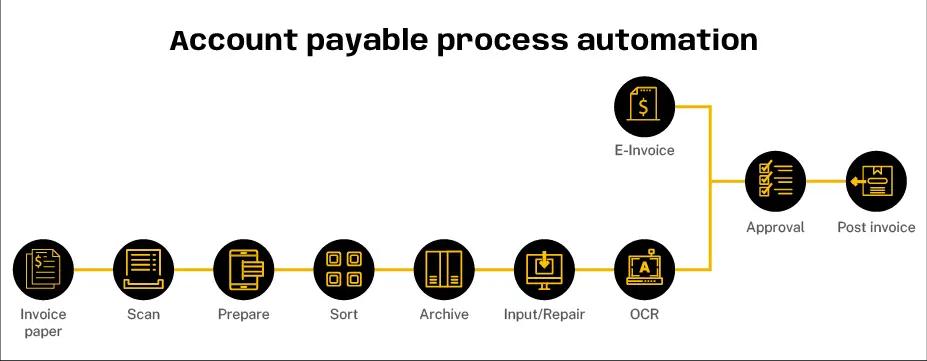
AP automation trends elevating its strategic value
It is not surprising that 2021 has already become a year of accelerated tech trends, and AP automation has gained vast importance among organizations. Below we list some of the prominent trends that will impact AP processes this year:
-
Remote work will remain: As working from home is likely to remain in the post-COVID period, RPA solutions will become an essential part of doing business.
-
AP transformation will continue: During the pandemic, manual processes threaten business continuity and resilience. Business leaders are now addressing this issue with urgency.
-
Strategic B2B payments will improve: Companies will focus on consolidating vendors to reduce costs while looking at payment terms to manage cash flow.
-
Freelance work will increase: With more companies getting used to remote workers, consultants, and freelancers, AP teams will receive new invoices with distinct reporting needs.
As companies face new challenges, AP processes will play an essential role in overcoming financial setbacks. Those who have already embraced automation will significantly see the advantages as they strive to keep up with the ongoing changes. Today, with more leaders recognizing the real value of automating AP processes, these roles are no longer seen as merely back-office functions.